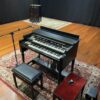


Description
The Hammond B-3
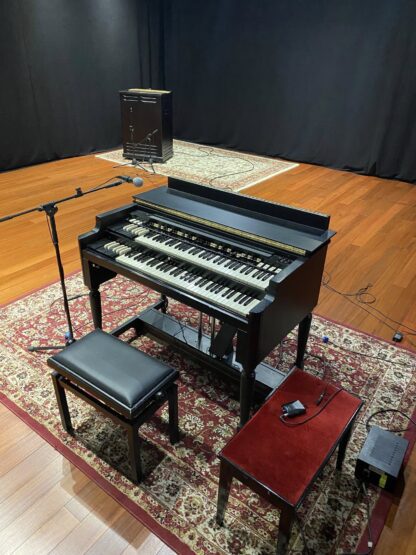
There were many varieties of the Hammond organ, some designed for home use, some designed for church use, and some designed for live gigs and studio recording. But the most popular variety, and the one still commonly in use today (if you can find one that isn’t too beat up) is the Hammond B-3. This organ has two 61 note keyboards, (manuals), sometimes called the swell (top) and the great (bottom), a variety of built-in special effects, (including “percussion” effects, several different chorus and vibrato effects, and adjustable attack and decay effects), 9 preset keys for both manuals, (the inversely white and black keys on the bottom octave of each manual), two sets of nine stops (drawbars) for each manual, a full two octave set of foot pedals with two pedal drawbars built in to the console, a volume pedal (expression pedal) built into the base, a solid walnut body with 4 legs and base, a built-in stool, and it weighed in at over 400 pounds. Also, it needed to be run through a separate speaker called a Leslie (which I will explain later), which also came in many varieties and sizes, but which was usually around six feet tall and weighed almost as much as the organ. To get a B-3 to a gig, you would probably need a truck or a van to transport it, a dolly or three to four guys to carry it, and then a prayer that you didn’t have to carry it up too many flights of stairs. Why, you must be wondering, would any sane musician want to take this piece of furniture with them out to a gig? If you have ever heard a good B-3, you would understand. A Hammond B-3 can all at once sound like a carnival, a big band, a horn section, a small jazz combo, a funk group, a percussion section, a flute, and/or countless other things. How does one instrument manage to do all this? The answer begins in the drawbars.
The Drawbars
You’ve heard the expression, “Pulling out all the stops?” The drawbars on the organ are these very stops. The organist can “voice” each stop as he plays. Meaning, any one of the nine drawbars that go into the makeup of an organ sound can be individually altered, either while playing, or permanently preset into one of the 9 preset keys. (The other three are for setting or clearing the presets.) Each drawbar has eight degrees to which it can be literally “drawn” or pulled, out of the console of the organ, the eighth being the loudest, and all the way in being silence. The nine drawbars represent the nine most important harmonics, going in order of left to right, the sub-octave, the fifth, the unison or fundamental octave, the 8th, the 12th, the 15th, the 17th, the 19th, and the 22nd. All of these except the 17th are either roots or fifths. The 17th is a third. The colors on the drawbars themselves are also related to their harmonic pitch. The white and brown drawbars are called the consonants, all the roots and the lower fifths, and the black drawbars are called the dissonants, the higher fifths and the third. Using this basic harmonic series, almost any instrumental tone may be imitated or mimicked. Also, the inventor of the Hammond organ, Laurens Hammond, who invented the B-3 around 1937-39, and who later unveiled it at the 1939 AES show here in New York City at the RCA building, used some of his father’s techniques, who happened to be a designer of pipe organs, in the development of his new organ. The drawbars are all labeled to represent pipe pitches, represented by length, ranging in order of largest to smallest, from left to right. These “lengths” are, 16′, 8′, 5 1/3′, 4′, 2 2/3′, 2′, 1 3/5′, 1 1/3′, and 1′, being the smallest. By the way, the two drawbars for the pedals are called the Super-Octave and the Sub-Octave, and their respective “lengths” are 16′ and 8′. Just like the fundamentals for creating sound waves lies in harmonics, (much like what we have learned in this class,) such is the way with the drawbars and their harmonic series. For instance, in terms of sound waves and frequency, the 1st harmonic by itself creates a sine wave, or a flute/recorder-type sound. The odd harmonics create a square wave, or a clarinet-like sound. The odd harmonics “squared” create a triangle wave, or a string-like sound. And all harmonics together create a sawtooth wave, or an oboe-like sound. Drawbar settings use the same kind of premise; various levels and volumes of harmonics are used to create sounds. There are literally millions of tone qualities and endless shades of dynamic level available on the Hammond organ. Figure 1, (see back pages), or drawbar setting (00 6200 000) is an example of a flute tone. Figure 2 (00 4345 554) is an example of a violin tone. Figure 3 (00 6876 540) is an example of a trumpet-like tone, and Figure 4 (54 5444 222) is an example of a diapason, or a typically organ-like tone quality. There are also the typical jazz settings (not included in the appendix,) such as 88 8000 000, the most common, used by jazz players 90% of the time, 88 8400 080, for a bit more of a whistle during solos, 80 0000 088, for a high-end chordal voice setting, or the full blown 88 8888 888, the largest sound possible on the organ, which is used usually for loud chord solos, or huge crescendos or climaxes. That particular setting truly defines the phrase “pulling out all the stops”, and it means exactly what it says; the works. Of course, there are a multitude of other possibilities, and every player out there has his or her own particular setting, or ‘sound’. But how exactly do the drawbars do what they do? The answer to that lies in the tone generator.
The Tone Generator
The tone generator, except for the Pedal Solo Unit, which controls the sound generated by the pedals, is composed of 91 tone wheels, located inside the console. Each tone wheel generates magnetically one of the pitches of the fundamentals (the first harmonic) or the overtones, (all harmonics above the fundamental) of the many “stops”. By the way, musical pitches on the organ range from 32.692 Hz in the bass to 5919.85 Hz in the treble, a span of seven and a half octaves. The frequencies of the Solo Unit for the pedals range from 16 to 3136 cycles per second. The expression pedal has a range over 48 decibels in power. (The B-3 is a loud instrument.) Anyhow, on the outer rim of each tone wheel, which are only about the size of silver dollars, are a series of “hills and valleys” which disturb the electromagnetic field in a near-by magnet and the circuitry with which it is connected. These wheels turn on their axles at a carefully controlled speed. The disturbances are in the nature of sine waves, and are timed as the musical pitches themselves. These disturbances, which are really just fluctuations of electrons in tubes and wires, are extremely weak and have to be amplified millions of times before they are strong enough to move the cones in the external speakers, which, in turn, must move all of the tons of air in a room before the sound actually gets to you, the listener. The waves, while they are still in the electrical form, pass through an amazing set of filters, mixers, and other devices that process the final result, but to the player, it is so much more less complicated than all of that.
Why The Hammond?
Even today, the influence of the Hammond organ is felt everywhere. Listen to any song on any given radio station, and it is a strong bet that you will hear someone banging away at a B-3. By the way, the B-3 is only one of the many different styles of organs that the Hammond company produced, among which were also the Chord organ and the Spinet organ. This one just happened to be the most “portable”, if you can call it that, and it really had the best sound, today what we would call the “classic” Hammond sound. The Hammond is used in all types of music, from Gospel, to Blues, to Jazz, to Funk, to Rock. My first real exposure to the organ was early in my musical career when I was still listening to Emerson, Lake & Palmer, and Yes almost exclusively, studying and memorizing every Keith Emerson and Rick Wakeman lick that I could transcribe. (Especially Keith Emerson, who used to take his B-3 and throw it around the stage, ride it like a horse, set it on fire, stab it, or whatever else.) Back then I knew I loved the sound of the organ, but I never really realized it’s full capability until I reached college and was introduced to my first Jimmy Smith record, who is world renowned as the master of the jazz organ, and really the first musician to treat the organ as an honest-to-god instrument, and not just a novelty to be thrown in at sporadic times, the way Count Basie did back in the early fifties. My friend popped in the album Organ Grinder Swing, and said, “Check this out – this guy solos with his right hand, comps chords with his left, plays bass lines with his left foot, and controls the volume with the right.” I must have said something like “Yeah, right”. Not only was this man doing everything that my friend had described, but he was also soulfully moaning and wailing to the music that he was creating, and I knew immediately that this was something serious that I had to know more about. Four years later, and I consider myself to be a full time jazz organ player. Jimmy Smith, though, was not the only one to make a name for himself playing the Hammond. Among the many in jazz, funk, and rock are Richard “Groove” Holmes, Jack McDuff, Jimmy McGriff, Joey and John DeFrancesco, Shirley Scott, Dr. Lonnie Smith, Larry Young, Don Patterson, Paul Shaffer, Don Pullen, Larry Goldings, ‘Big’ John Patton, Booker T. Jones, Billy Preston, Merl Saunders, Ray Manzerek, Jon Lord, Fats Waller, and so many others. I have had the opportunity to take lessons with both Dr. Lonnie Smith and Larry Goldings, and let me assure you that these men take the instrument very seriously, and that they are monstrous musicians, capable of doing amazing things. I have also had the opportunity to meet Jimmy Smith at a club in Boston, and let me assure you that the man, although intense, is completely insane.
The Leslie
There is one more thing that must be described if we are to fully appreciate the character of the Hammond, and that the is the Leslie tone cabinet. The organ needed an external speaker in order to be heard, and it also needed one specially designed that had rotating speakers, so that the vibrato effects in the organ could come out. Besides, the organ had a special multi-pin output that could only be connected to a tone cabinet, a conventional amplifier would never have worked. The Hammond company actually designed several tone cabinets of their own, but they never caught on as well as the similar model produced by the Leslie corporation, which simply sounded better anyway. In the early days, there was a sort of rivalry between the two companies going on, but not long after the Leslie pretty much became accepted as the standard. Even Laurens Hammond, who publicly pooh-poohed them had his own home organ coupled with a Leslie. Like the organ itself there were a lot of varieties of these speakers, but one of the most commonly used models was called the Leslie 122, which stood around six feet high, and had two rotating treble horns at the top of the cabinet, a bass woofer inside, and another pair of rotating horns at the bottom. The rotation of the horns were continuous, and they only had two speeds, fast and slow. When moving slow, which they most often do, is when the clean, pure organ sound comes through. But when the fast switch is activated on the console of the organ, the speakers pick up speed, eventually going as fast as they can, and that is the classic huge Hammond vibrato sound. A Leslie is really something to hear close up. It is a very loud and a very powerful sounding speaker. Someone at the controls of an organ has a lot of power at their disposal, not to mention the possibility of overdrive, which is a common sound used by organ players. This happens when you maximize the volume on the expression pedal and the Leslie distorts, which is very effective, but should probably only be used sparingly. Most organ players preferred the sound of stereo Leslies, but one would work just fine. Some other models were made that were smaller and more portable, and it often depended upon the tastes and needs of the players themselves. Some players preferred the sound of the Leslie if only the bottom horns rotated instead of both, or the other way around. Some players combined other speakers, like bass cabinets, in conjunction with their Leslie. The way you set up your Leslie was almost as important as the drawbar settings themselves. But enough background on the instrument; its time to move on and explore the legacy that the Hammond organ has left the future generation of keyboard players and the future of music technology in general.
The Hammond’s Influence
As I mentioned before, the Hammond B-3 was immensely popular during the 50’s and 60’s, and even into the seventies when the first portable synthesizers began to appear. Keyboard players like Keith Emerson and Rick Wakeman, even though they were surrounded by an army of Moogs, Mellotrons, and electric pianos, would still lug these things around. For one reason, because even to this day, though the Hammond could imitate the sound of almost any instrument, nothing could imitate the sound of a Hammond. And it can be safely said that players were infatuated with the instrument because it really was the world’s first portable synthesizer. Well, was it? It utilized oscillating vacuum tubes, manipulated sine waves through the use of harmonics, could actually save preset sounds, (not to mention sounds that actually sounded like something else besides an organ), had modulation control, (the two Leslie speeds and the different tremolo, chorus, and vibrato settings), had attack and decay parameters, volume pedal control, and even had echo and sustain available on later models. Doesn’t that sound a lot like the early synths we know? When the early developers of synthesizers, Robert Moog on the east coast and Don Buchla on the west, were tinkering with oscillators, it is a good bet that they knew of the Hammond and what it was capable of. Moog even used a modified organ manual as his keyboard controller. Especially later on, when new synthesizer companies began mass-producing their instruments, the demands of keyboard players that were already out there on the scene playing warranted that they would have to appease the Hammond enthusiasts, who had become comfortable with the organ’s by-then ‘standard’ features. Entire dictionaries were put out on the Hammond organ alone, jammed with the different drawbar settings that all sounded different from one another. Numerous publications were being put out on the instrument. Teachers actually began instructing students on the Hammond as its own new instrument. Needless to say, the movement was large, and it is true that much of what was standard on the Hammond organs back then became standard on the synthesizers that we know of and use regularly today.
The Future
There has been a great effort by the synthesizer companies of today to emulate the sound of the Hammonds. You yourself may have a couple of killer Hammond samples on your machine, but there is nothing like being behind the real thing, starting the motor, (which is a technique all to itself) and feeling the thing purr to life like a giant, breathing creature. Not only that, but a sample is just a sample, and you cannot do the any one of a hundred things to the sound that you could do if you were playing the real thing. Nevertheless, there has been a good deal of genuine effort made by different companies. In the early eighties, the Korg company were the first to delve into the field. They released two keyboards, the B-X3 and the B-X2, both good efforts, yet both flawed in many ways. The B-X3 was a dual manual organ, with one full set of drawbars for each manual, and the B-X2 was a single manual organ, with one set of drawbars. Both were highly portable, and relatively lightweight. Korg had managed pretty well to nail the grungy, down and dirty sound of the Hammond, but you could not program presets onto it, (it came with three unchangeable presets that were terrible), most of the special effects, especially the percussion (attack) effects were cheesy sounding, and the built-in Leslie simulator was horrendous. More recently, though, a lot of new efforts have been made, but still nothing has exactly hit the mark. The Hammond company, which actually closed down for good in 1975, reopened in 1992 with a whole new line of fully digital, MIDI capable organs. Incidentally, that means that even if you could get the last B-3 to come off the production line, you’re still buying an instrument that is 18 years old. Among Hammond’s new line is the popular X-B2 (which I traded up to after owning the Korg B-X3), which is a single manual organ that was pretty much modeled right after the old Korg B-X2. The X-B5 is another, a dual manual organ with a whole slew of special features, most of which aren’t really necessary on an organ, and also the X-B3, an exact replica of the original B-3 console, only with a 90’s style high gloss finish. As far as sound quality, these new Hammonds come very close, especially when coupled with the also brand new highly portable Leslie 302 tone cabinets, designed specifically for the new Hammond line, but they too have their nitty-gritty flaws. Other recent efforts include a new Rhodes drawbar keyboard, which has some nice features but also lacks a great deal, a rack mount module called Vintage Keys, another rack mount module called the VOCE DMI-64 Mark II, and its later version, the VOCE Micro B, and a few others. There is even a new rack mount Leslie simulator available from a German company which is very good, but very expensive. So far, the new Hammond line has pretty much dominated the new organ market, and happily, there has been somewhat of a B-3 revival going on. KEYBOARD magazine recently devoted an entire issue to the subject of the Hammond B-3. GOFF Professional of Newington, CT, run by Mr. Al Goff, which started out as a kind of basement operation has expanded into a very successful new company committed to the restoration and rental/sale of vintage B-3s and Leslies. (See their ad in the classified section of any issue of KEYBOARD magazine.) He is an excellent resource of information, and has become the foremost authority on the east coast for Hammond organs. Just about every famous organ player on the scene today including Keith Emerson, T. Lavitz, Jimmy Smith, Joey DeFrancesco, and Jimmy McGriff has had their organ or Leslie restored by Goff Professional. They even rework the brand new models and the new Leslies to sound awesome. They have also done work for groups like Hall and Oates, the Allman Brothers, Phish, Grayson Hugh, and Widespread Panic. Joey DeFrancesco, by the way, famous son of organist John DeFrancesco, is one of the fresh new musicians on the jazz scene who is helping to put the Hammond B-3 back into the spotlight. He is currently working with John McLaughlin. Also, Larry Goldings is a hot new player on the scene who has already worked with Maceo Parker, Jim Hall, and John Scofield. A lot of the old jazz players too, like saxophonist Lou Donaldson, are returning to the classic old sound of the jazz organ trio (organ, guitar, drums) as a rhythm section. Go to any rock show now, and you’re bound to see the group’s keyboard player on stage with a restored B-3 and Leslie cabinet. New groups like the Black Crowes and Phish use the B-3 almost exclusively as their keyboard instrument. I’ve seen Hammonds all over the place in rock videos, from Bryan Adams to Eric Clapton. Basically, they’re trendy again, and they’re everywhere. Even in this day and age, when technology can do amazing things, some things stubbornly refuse to be replaced. It will be interesting to see what other developments in this field take place in the years to come. Many keyboard players, myself included, will be watching intently.
Bibliography
-
Irwin, Stevens. Dictionary of Hammond Organ Stops.
-
G. Schirmer, Inc.: New York, NY, 1970.
-
Eby, Robert L. Electronic Organs.
-
Van Kampen Press, Inc.: Wheaton, IL, 1953.
-
Irwin, Stevens. Dictionary of Electronic Organ Stops.
-
G. Schirmer, Inc.: New York, NY, 1968.
-
Hammond X-B2 Owner’s Maunal. Hammond-Suzuki, USA.
-
Keyboard. November, 1991.
-
Miller Freeman, Inc.: San Francisco, California.
THE HAMMOND STORY
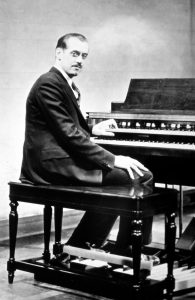 LAURENS HAMMOND
It’s been over 80 years since the world saw the first Hammond Organ,
and it all started with a genius named Laurens Hammond.
Laurens Hammond was born 1895, in Evanston Illinois. His mother was a unique woman, and sort of an inventor herself. His father was a banker, whose job afforded the Hammonds an affluent lifestyle, but he died shortly after Laurens was born. Laurens was intelligent, and loved to tinker. He attended Engineering school at Cornell, served in World War I, and returned to work various jobs; but Laurens Hammond longed to be an “independent inventor”, and got right down to work.
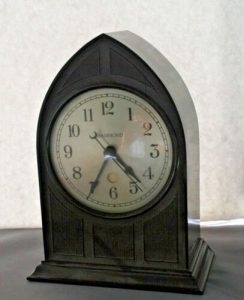 A Hammond Art-Deco Clock
Today we take electric power for granted, but in the 30’s, ” juice” coming out of the wall was often unstable. Hammond’s motor ran at the same speed no matter the voltage, and it was completely noiseless. Whatever could he do with this invention? Hammond hit upon the idea of applying his motor to run a clock. Because it was silent, there was no “tick-tock”, and his electric clock was an immediate success. Folks who forgot to wind their spring-driven clocks were no longer late for work! Many are still in use today, keeping very accurate time, and some have become very valuable collector’s items, though surprisingly, certain models can be found online at very reasonable prices.
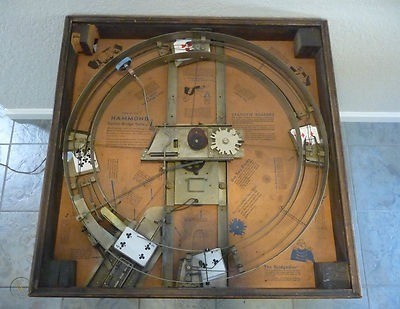 The Hammond Electric Bridge Table
The great depression of the 1930’s caused the bottom to fall out of the Hammond Clock Company. Hammond tried other applications, like an automated bridge table using his motor to drive a mechanism dealing cards to each player. The table gave Hammond a slight lift financially, but it, too, soon faded.
Laurens Hammond often remarked-when faced with having to come up with a new idea, the smart thing for an inventor to do is put together the old tricks you have done before, and maybe even use some of the other guy’s tricks as well.
 Teleharmonium Generator
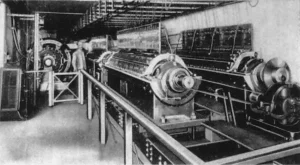
At the time, there was an effort underway by inventors to electronically replicate the sounds of a pipe organ, but no one had succeeded. Hammond’s associate George Stephens was aware of how one of the very first electric musical instruments created its tones. Around 1900, an inventor named Thadeus Cahill came up with the Teleharmonium. The Teleharmonium was a huge, mechanical system utilizing garbage can lid-sized (and larger) cylinders to generate sounds. The entire system required 30 boxcars to move, and a large multi-floor building in which to install it. The intention was for the music made by this beast to be piped into houses by means of telephone wires in a subscription scheme. Needless to say, this system failed, but the basic working idea had merit.
Although Laurens Hammond wasn’t a musician, he loved to hear the organ when he went to church with his mother as a child. Using a much, much smaller design based on the ideas of Cahill’s instrument, coupled with the synchronous motor, Hammond came up with what he called an “Electric Flute”. It Worked! At first he thought it would just be a toy, a plaything, selling for thirty to forty dollars, but thinking again, he saw that this could be a major advancement in musical instruments. What was a Pipe Organ other than a big box of “flutes”? On this basis, he proceeded to sketch the blueprints for what would become the Hammond Organ.
 Mr. Hammond’s Patent
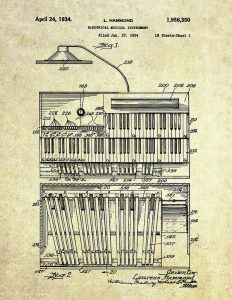
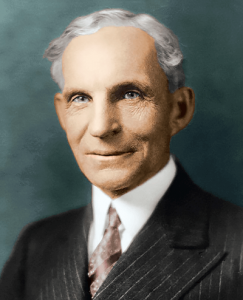
On April 24th, 1934 Laurens Hammond filed for a patent on his musical machine. The document was a whopper, spanning 18 pages and twenty thousand words. At that time the country’s top industrialist was automaker Henry Ford, who loved gadgets of all sorts. He got wind of Hammond’s patents, and sent men to Chicago to order six organs immediately. The problem? Hammond’s Organ hadn’t even gone into production yet.
Summoning Hammond to Dearborn, Ford wanted to find out if he could help the fledgling organ company get up to speed. Hammond declined Ford’s generous offer of material participation, but the experience cemented Hammond’s idea he had a winner. It is a common misperception Henry Ford got the first Hammond Organ. Mr Ford placed the first order, but he didn’t get the first organ. That privilege didn’t go to composer George Gershwin, either, as widely reported
 Henry Ford
The reality is actually much more pedestrian. After Laurens got the company up and running, Hammond’s Serial Number One went to a dealer in Kansas City, where it was used for years as a traveling demonstrator. Upon its retirement, it went to the Smithsonian in Washington, where it now resides. Henry Ford eventually DID get his six Organs, one of which is now displayed in the Ford Museum in Dearborn, Michigan.
 Organist Jesse Crawford
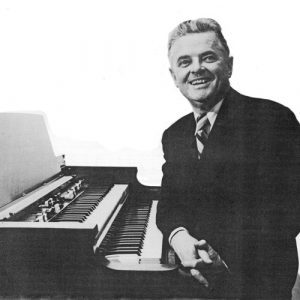
The Hammond Organ was an immediate success, and before long, Churches, Theatres and Concert halls were humming to the Model “A”‘s sound. The Great Theatre Pipe Organist Jesse Crawford switched from the Mighty Wurlitzer to the Hammond, and made popular recordings, some of which, like his Wedding Music offerings, remain available to this day. Another early star of the Hammond was Ethel Smith, whose dazzling technique (and equally dazzling looks) took her to the heights of stage and screen.
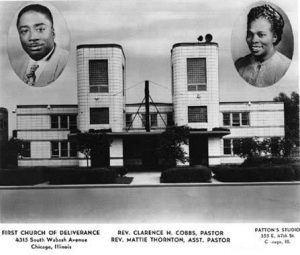 Rev. Clarence Cobbs & the 1st Church of Deliverance
On the west side of Chicago, near the original Hammond Factory, The First Church of Deliverance’s Piano played its last note. The Church’s flamboyant Minister, Clarence Cobbs wanted something different, and procured a Hammond Organ to replace the piano. Rev Cobbs was also one of the first African-American pastors to have his own radio show. He immediately began to use the Hammond Organ on his broadcasts, and it was a hit! Subsequently, a tradition was born that has never stopped growing, and has had incalculable influence on nearly every facet of music. Hearing the Hammond in Church inspired Wild Bill Davis to try the instrument in a jazz setting. Fats Waller followed, and an entire movement in Jazz was born. From there, the Hammond became popular in R&B, Rock, Country, Blues, and most every genre in music.
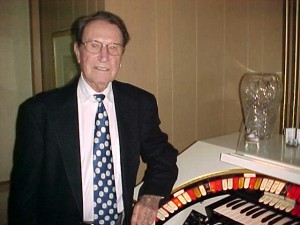 Donald J. Leslie
But the Hammond needed one more thing to become the King Of Instruments-The Leslie Speaker.
We think of them now as inseparable, fraternal twins, but the truth shows the Hammond Organ’s Birthday pre-dated the Leslie Speaker by seven years. The man behind the newer invention was Donald J. Leslie, an engineer who worked for a firm making Hammond Organ parts. Don was a keen music buff, and became interested in this new, marvelous instrument; but there was something that just wasn’t right to his ear. Laurens Hammond intended his organ to play in churches and classical concert halls, filling the role of the Classical Pipe Organ. Don, loved the Mighty Wurlitzer Theatre Pipe Organ, a totally different animal, indeed! Don wished the Hammond Organ could sound a little softer, like the Tibia Pipes on his beloved Wurlitzers. After some experimentation, Don Leslie hit on an idea that would put “motion” into the sound of Hammond Organ.
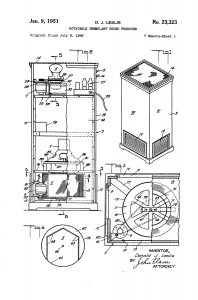 Leslie Speaker Patent
Don Leslie capitalized on a principle called the “Doppler Effect”. It’s why a train whistle seems to go down in pitch when a train passes you. Don took a horn speaker and mechanically made it turn around in a circle. Bingo! a legend was born. A fun fact here: Don built his first prototype using a closet for the enclosure!
The spinning treble horn and bass rotor gave the Hammond Organ a “tremulant”, as it’s called in the pipe organ world. Pitch-changing vibrato, volume-changing Tremolo, and a little “whoosh” of moving air all put together. It made the Hammond Organ sound completely different. Actually, not quite exactly like a Theatre Pipe Organ, but a lush, rich, distinctive sound of its own. The Hammond’s life in all popular music-Jazz, Rock, Pop, and all places in-between was born at that moment.
Don Leslie thought he had hit on a miracle, and rightly so, He promptly took his hot invention directly to Laurens Hammond but as fate would have it…Laurens Hammond hated the idea! He meant for his organ to play church and classical music, wanting his organ to sound like a traditional, classical/church pipe organ, and nothing but! Even though Mr. Hammond handed Don Leslie his hat and showed him the door, Don knew he had something golden. He went into business for himself, producing the musical innovation he called the “Vibratone-Pipe Voice Of The Electric Organ” And yes, the rumor is true…Hammond Dealers were NOT allowed to sell Leslie speakers. They couldn’t even acknowledge there was such a thing. You had to go to a TV/Radio or furniture store down the block from the Organ studio to order your “Leslie”. It sounds unlikely, but that arrangement worked just fine!
The Dean of Theatre Organists Jesse Crawford was among the first to popularize the sound of the Hammond and Vibratone combination, and did he ever! For a while, what we now know as “Leslies” were popularly called “Crawford” or “Hollywood” speakers.
Musicians are resourceful, and organists from every corner embraced the combination. Somewhere along the way, the “Vibratone” became the “Leslie Vibratone” and ultimately just the “Leslie”. Eventually, a two-speed motor was added creating the distinctive “slow” or “chorale” Leslie sound. Any tune’s excitement level could be boosted by having the organist glissando to a high C while simultaneously switching from slow to fast speed.
In 1958, Don again tried to sell his company to Hammond, but the old man was stubborn, and rejected it again. Don then let the beast out of the cage, licensing his invention to many other organ manufacturers, while continuing to practically match Hammond’s organ production one-for one. Who wanted a Hammond without a Leslie? The company was so successful, that Electro-Music (as Don’s company was called) never had to advertise.
Don Leslie eventually sold Electro-Music and moved on with his life, happily, but never again made such an earth-shattering invention. He died in 2004 at the ripe old age of 93, and was as sharp as a tack to his last day. Oddly enough, Don’s personal instrument (in the picture above next to Don) was a home-built hybrid electronic/pipe Theatre Organ which did not employ one of his namesake speakers. Don never sought the limelight as some of his contemporaries did, so you don’t hear of Don Leslie (the man) in the same manner as Les Paul, Leo Fender, or Bob Moog, but his contribution was just as important.
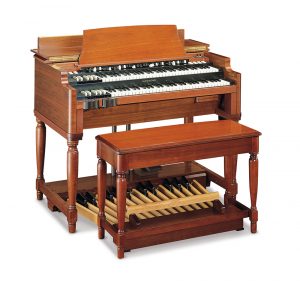 The Mighty Mighty Hammond B-3
In 1954, Hammond introduced the organ that secured the legend, the Model B-3. Its Chorus-Vibrato and Touch-Response Percussion™ made sounds that were totally new and fresh. It’s hard to determine whether musicians were ripe for a new sound, or the new sounds pushed musicians into uncharted waters; but one thing is for sure: When Jimmy Smith met the B-3, music changed forever. He remains the single most popular and influential musician to touch a Hammond’s keys.
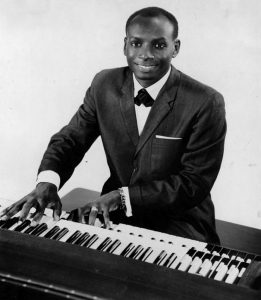 Earl Grant
Gospel churches embraced the Hammond B-3 like no one else. The Ministers of Music elevated Hammond playing to a level leaving even the most proficient artists shaking their heads in disbelief. Many believe the Hammond Organ reaches its greatest heights in the hands of Gospel artists.
The B3 also swept the nation in pop during the late fifties. Artists such as Eddie Layton, Lennie Dee, and Jerry Burke on the Lawrence Welk TV show had hit records, and sold out concerts. But perhaps the top of the pop B-3 players was Earl Grant, whose smooth style on the number one hit “Ebb Tide” led him to become a regular guest on the Ed Sullivan show
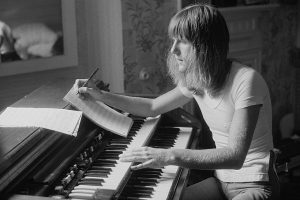 Keith Emerson
Jazz Organ became the quintessential “cool” music for the swinging Sixties, Jimmy Smith was the Top Cat, but Jimmy McGriff, Brother Jack McDuff, Charles “The Burner” Earland, Don Patterson, “Groove” Holmes and Dr. Lonnie Smith (to name a few) swung with a ferocious fervor.
The rock revolution was also in full bloom, and the Hammond Organ played a large role. Al Kooper, Brian Auger, Rod Argent with the Zombies, Steve Winwood with Traffic, Felix Cavaliere with the Rascals, Mark Stein with Vanilla Fudge, Keith Emerson with ELP, Rick Wakeman with Yes, John Paul Jones with Led Zeppelin, Jon Lord with Deep Purple, Gregg Rolie with Santana, Neal Doughty with REO Speedwagon, Dennis DeYoung with Styx, and Jerry Corbetta with Sugarloaf all had platinum hits with the B-3 front and center. Even Billy Joel’s very first album was a hard-rocking affair that found the “Piano Man” playing a highly-amplified B-3. (For vinyl aficionados, the LP was entitled “Attila” on the Epic label) Who knows how many youngsters caught the Hammond bug from hearing these (and other) stars?
The B-3 was also de rigueur for the Soul and R&B sounds of Motown and Philly. Keyboard pioneers like Billy Preston and Sly Stone all came of age as Hammond Organists in their Churches, and injected that flavor into all of the music they influenced
In 1975, the last electro-mechanical B-3 left the assembly line. About 270,000 were built. However, times were changing. Moog and Arp synthesizers were the rage of the day. Kids of the burgeoning “Mall Culture” deemed the organ “square”. Seeing leisure-suited salesmen playing songs aimed at their grandparents probably didn’t help
The Punk and New Wave movement all but rendered the organ (and most other keyboards) obsolete. Hammond’s presence in pop music dimmed. The Hammond brand was sold to an Australian firm who made organs having nothing to do with Hammond’s illustrious history, and the King of Instruments went into cultural hibernation for almost ten years.